Homeowners in Mississippi blame a noisy data center for sleepless nights. The mayor’s advice? “Consider selling.”
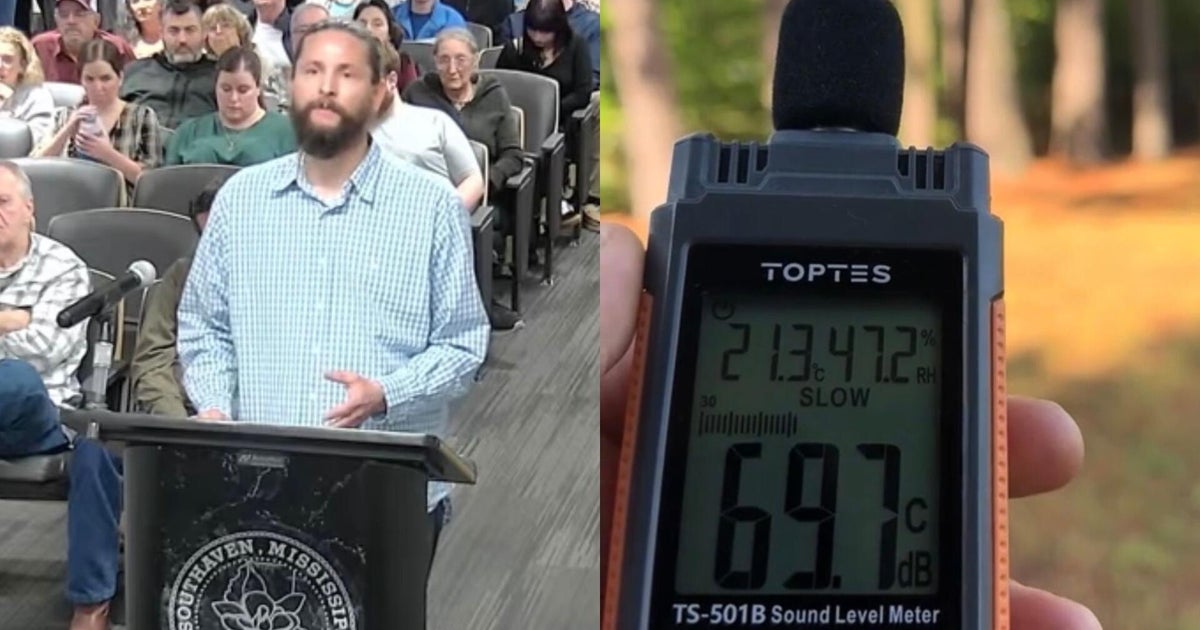
It was 4 a.m. on a Sunday morning and 46-year-old Jason Haley was wide awake again.
The suburban silence that Haley had become accustomed to in her two decades as a resident of Southaven, Mississippi, had been replaced, over the past few months, by a constant hum, like a plane flying over her house, she said.
The noise that kept Haley awake came from a plant that fed Elon Musk xAI in the area, according to a lawsuit filed in June against the company and its subsidiary, MZX Tech. Haley and two other Southaven residents, who live about a mile from the plant, allege in the lawsuit that the “near constant” noise and vibrations are causing negative physical and psychological health effects.
The presentation comes amid growing resistance towards data center development, with the majority of americans opposing building a data center locally, according to a Gallup poll released earlier this year.
Similar disputes are unfolding across the country, such as in Mount Pleasant, Wisconsin, where a lawsuit This month filed by residents alleges that a data center emits “excessive and unreasonable noise” on residents’ properties and in Lowell, Massachusetts, where noise from a data center’s cooling center “disrupts neighbors’ sleep,” according to a april outfit.
There are more than 4,000 data centers in the US, according to a recent United Nations study report. To power the data centers, developers are building their own plants, sometimes without warning to residents like Haley.
Haley contacted Southaven Mayor Darren Musselwhite about the noise in emails he shared with CBS News. Last November, he urged Musselwhite to drive around the neighborhood “and listen for the constant high-pitched noises.”
“I am aware of the noise and am working on a solution with xAI officials,” Musselwhite had responded to Haley an hour later. “It’s a problem,” he said in another email later that day.
But soon, another sleepless night came and Haley was back to emailing the mayor.
“Anyone else I can contact?” Haley wrote to Musselwhite. “It’s almost 4am and I can hear it from my bed. The high pitch and roar combined is at full force right now. My ears are ringing. I can’t live in this. How did this get approved?”
“I don’t care that this is Elon’s project”
Just north of Southaven, which sits on the Mississippi-Tennessee border, xAI’s Colossus data center went online in Memphis in September 2024. The company called it “the world’s largest AI supercomputer.”
At the end of July 2025, Musk was announcing that another data center, Colossus 2, would begin operating in the area within weeks.
Days later, an announcement appeared on Southaven residents’ Facebook accounts: A power facility that had been dormant for decades will be reactivated to support the growing operations of xAI’s data center in the area, Musselwhite. saying.
The post was met with a flurry of comments, with some praising the development and others expressing concern about the plant’s impact on the environment and the pressure on local resources.
Meanwhile, Haley began to hear sounds.
“My first thought was that someone had a leaf blower running all the time,” he said.
By December, the noise had become commonplace. He began to have headaches, stopped sleeping, and fell into feelings of hopelessness and depression. The noise was inescapable, he said, and despite his best efforts to drown it out (sleeping with earplugs, getting a box fan for white noise), it continued to play.
Then Haley started speaking out: at city government meetings, on Facebook and through TikTok, where he posts videos of himself measuring noise with a sound level meter. He later became involved in a grassroots coalition called Safe and soundraising awareness of concerns surrounding xAI initiatives in the region.
The “activist” label is one he reluctantly accepts.
“I’ve never been involved in any kind of activism, I’ve never kept up with politics,” he said. “I’m just a guy who has a problem with this noise and I started speaking out and trying to raise awareness.”
When he emailed Musselwhite again about the noise in December, his message included a disclosure: “I’m not a Republican or a Democrat, I don’t care that this is Elon’s project. I didn’t know whose it was when I started complaining about the noise that started in August.”
Musselwhite responded a few days later.
“As I mentioned to him at the public meeting, he seems like a reasonable person,” he said. “I’ll give you some unsolicited advice from an older man, be careful who you associate with so as not to damage your credibility.”
In January, xAI was expanding its presence with a third data center in Southaven, MACROHARDDR. As residents like Haley continued to respond online and at town meetings, Musselwhite had a new message.
Southaven, said in a post on facebookwas “under attack from everyone who chooses to oppose Elon Musk because of his high-profile political stances.” He warned residents to “beware of the smokescreen of radical politics.”
In his emails to Haley, Musselwhite continued to acknowledge that noise was a problem.
“The noise issue is one of my top priorities and I have had detailed conversations with xAI and many independent professionals to resolve it,” he wrote in March.
But in the same email, he offered Haley more advice: “I know they want houses for employees, so you might want to consider selling your house.”
CBS News made multiple attempts to speak with Musselwhite and did not receive a response.
Migraines, ringing in the ears and sleepless nights.
Moving is not Haley’s preference, but she said she is in the financial position to do so if she wants to.
That’s not the case for everyone.
A little more than a decade ago, Taylor Logsdon, 31, bought a home for her growing family in Southaven and began building her life around it.
“We loved it here,” he said. “He was peaceful, he was calm, he didn’t have to worry about anything.”
But that was before the noise, so loud, he said, that it sometimes shakes his house. Logsdon, who is also involved in the Safe and Sound coalition and is suing xAI along with Haley and another Southaven resident, said she has experienced migraines and anxiety as a result of the noise.
He said he has persistent ringing in his ears, as do his children. A full night’s sleep has become rare for the family.
“I would move tomorrow if I could,” he said, adding that he needs to save money before he can afford to move.
Their children, all under 13, have trouble staying awake at school.
“One of them is very angry all the time; he’s never, ever been like that, but he’s irritable like all the time,” she said. “I feel like I’m more agile too.”
xAI spent millions of dollars trying to mitigate sound with a sound wall, berm and evergreen trees, Musselwhite said in a Facebook post in February.
“It hasn’t helped yet. It hasn’t even made a dent,” Logsdon said.
People who live in areas where there is “constant humming or buzzing” report headaches, stress and sleep disturbances, said Dr. Samoon Ahmad, a clinical professor of psychiatry at New York University.
A 2023 study found that environmental noise exposure can lead to adverse associations with cardiovascular disease and mortality, diabetes, hearing impairment, neurological disorders, and adverse reproductive outcomes.
“People think annoyance is an abstract term,” Ahmad said. “It’s not an abstract term because it has real physiological ramifications.”
The World Health Organization recommends less than 40 decibels of annual average nighttime noise outside bedrooms to avoid adverse health effects. Haley has recorded noise levels of over 60 decibels as of 10:15 pm from her backyard in Southaven.
Musk Memphis
Even before Logsdon and Haley decided to take action against xAI, Musk’s growing presence in the Memphis area attracted the attention of health and environmental advocacy groups.
The National Association for the Advancement of Colored People filed a lawsuit in April against xAI alleging that the Southaven plant emits “significant” amounts of harmful pollutants from its 27 gas turbines, which have since increased to 59, according to a court filing reviewed by CBS News. The NAACP also filed an appeal challenging the Mississippi Department of Environmental Quality’s decision to issue an air permit allowing the Southaven plant to operate 41 permanent methane gas turbines. an independent study found Its operation would increase air pollution in an area that already clinging with a disproportionate number of asthma-related emergency room visits.
CBS News has contacted xAI for comment.
Musk’s investment in Southaven’s latest data center brings his company’s contribution to the area to $20 billion, according to Mississippi Gov. Tate Reeves’ office. the governor called him “the largest economic development project in Mississippi history.”
Musk’s financial footprint has also extended beyond data centers: MZX Tech donated more than $1.3 million to the Southaven Police Department in February, according to the donation agreement obtained by CBS News, and has offered Starlink at half price for those in the Memphis region.
But Logsdon says the cost to her and her family’s health makes her wonder why she feels her city is willing to “harm a few to reap the benefits.”
“We weren’t a failed city before,” Logsdon said. “It’s not that our economy was terrible here.”
Southaven had a median household income of more than $70,000 in 2024, according to the U.S. Census Bureau, $20,000 more than the state average.
Logsdon, currently a stay-at-home mom, will look for work this fall so she and her husband can start saving to move out of the plant. For now, his goal is to sleep through the night.
“I hope my family can get back to our normality,” he said. “Being able to sleep at night, being able to enjoy my backyard, being able to go swimming.”
Reference: Read Latest News in Spanish


